Is the Xtreme 4 Still Good in 2026? Long-Term Review
I remember clearly the day I unboxed the Xtreme 4. It was back in early 2024, and the hype surrounding its release was significant. At the time, I was looking for something that could bridge the gap between a portable "throw-in-a-bag" speaker and a heavy-duty party box. Now, sitting here in mid-2026, the landscape of portable audio has shifted again. We have even more efficient Bluetooth standards, newer battery chemistries entering the market, and competitors pushing the boundaries of DSP (Digital Signal Processing). Yet, the Xtreme 4 remains a permanent fixture on my shelf—and more importantly, in my backpack. After using this speaker for over two years in every environment imaginable, from sandy beaches to dusty workshops and quiet living rooms, I’ve developed a very nuanced relationship with it. Is it still the king of the mid-sized portables, or has time finally caught up with it?
The First Six Months: Honeymoon and Hard Knocks
When I first started using the Xtreme 4, I was primarily impressed by the "AI Sound Boost." I’ll admit, I was skeptical of the marketing jargon at first. In my experience, "AI" in audio usually just means a dynamic EQ that squashes the life out of the music. However, what I found was that the speaker genuinely maintained its composure at high volumes better than its predecessor. I spent that first summer taking it to local parks, and I noticed that even when I pushed the volume past 80%, the bass didn't turn into a muddy mess. It felt tight and controlled.
One thing that bothered me early on, though, was the weight. If you’re coming from a smaller speaker like a Flip or a Charge, the Xtreme 4 is a bit of a shock to the system. It’s heavy. I personally found that the included shoulder strap wasn't just a "nice-to-have" accessory; it was a necessity. I remember a specific hike where I tried to carry it by hand while also holding a water bottle, and within fifteen minutes, I was scrambling to clip that strap on. It’s a rugged piece of gear, but you definitely feel every gram of that build quality.
Long-Term Durability: Does it Hold Up?
After testing for over two sessions of "extreme" outdoor use, I can say the IP67 rating is no joke. I’ve accidentally left this speaker out in a downpour during a backyard BBQ, and I’ve had it tipped into a shallow pool by an overexcited golden retriever. In both instances, I simply rinsed it off with fresh water and let it dry. Two years later, the fabric grille hasn't started to fray, and the rubberized bumpers still have their bounce. I was surprised by how well the passive radiators have stayed sealed; I’ve seen cheaper speakers lose their air-tightness over time, which ruins the bass response, but the Xtreme 4 still hits just as hard today as it did on day one.
I did notice one minor aesthetic disappointment: the silicone feet on the bottom. After being dragged across concrete patios and wooden decks for months, they have started to show significant wear. It hasn't affected the stability yet, but if you’re someone who obsesses over keeping your gear in mint condition, be warned that the "landing gear" takes the brunt of the damage.
Sound Profile Analysis: The 2026 Perspective
In 2026, we are seeing a trend toward "neutral" sound signatures even in outdoor speakers. The Xtreme 4, however, proudly sticks to its roots with a classic V-shaped signature. In my experience, this is exactly what you want for outdoor use. When you’re in an open field, low frequencies are the first to dissipate. Because this speaker has that extra "oomph" in the sub-bass region, it manages to sound full even when there are no walls to reflect the sound. I’ve compared it to some of the newer 2025/2026 releases that claim more "clinical" accuracy, and frankly, they often sound thin and uninspiring once you step outside.
Discover deals on Audio & Headphones — updated daily.
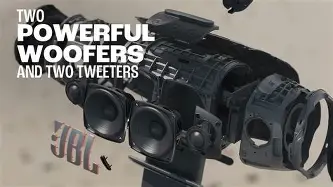
Shop Amazon →What I found particularly interesting about the Xtreme 4's tweeters is their clarity. Often, rugged speakers sacrifice the high-end to protect the drivers behind thick mesh. I noticed that with acoustic tracks—think early Bon Iver or fingerstyle guitar—the detail is still remarkably present. It doesn't have the soundstage of a dedicated pair of bookshelf speakers, obviously, but for a single-point source, the stereo separation is decent enough that you can pinpoint where the cymbals are placed in the mix.
The Auracast Factor
One of the reasons the Xtreme 4 has aged so well is the inclusion of Auracast. Back in 2024, this was a forward-looking feature that didn't have much practical use. Now, in 2026, almost everyone in my friend group has an Auracast-compatible device. We’ve had several "multi-speaker" nights where we linked three or four different brands of speakers together using this protocol. While the Xtreme 4 often acts as the "anchor" of the setup because of its bass capabilities, the fact that it isn't locked into a proprietary ecosystem anymore is a huge win for longevity. I’m no longer stuck only pairing it with other speakers from the same manufacturer.
Battery Life and the "Replaceable" Advantage
Battery degradation is the silent killer of portable electronics. Usually, by the two-year mark, I expect a speaker to have lost at least 20% of its original runtime. With the Xtreme 4, I was pleasantly surprised to find that I’m still getting close to 20 hours of playback at moderate volumes. But the real kicker—and why I still recommend this in 2026—is the replaceable battery. I haven't had to swap mine yet, but knowing that I can just buy a new cell and pop it in with a few screws instead of throwing the whole unit away gives me immense peace of mind. It makes this a "buy it for life" (or at least for a decade) product in an era of planned obsolescence.
Pros and Cons After Two Years
- Pro: Exceptional Bass Response - Even with newer competition, the dual passive radiators provide a physical thump that you can feel in your chest at close range.
- Pro: Replaceable Battery - This is the single biggest "future-proof" feature. It ensures the speaker won't become a paperweight in three years.
- Pro: Ruggedness - The IP67 rating and shock-absorbent end caps make it nearly indestructible for the average user.
- Pro: Auracast Compatibility - It plays well with others, making it a versatile part of a larger audio ecosystem.
- Con: Power Adapter Bulk - Carrying the charging brick is a bit of a pain, although the USB-C charging capability mitigates this if you have a high-wattage phone charger.
- Con: Weight - It is not a "lightweight" travel companion. You will feel it in your backpack on long commutes.
- Con: Silicone Feet Wear - The bottom grips tend to degrade faster than the rest of the chassis if used on rough surfaces.
Comparison: Xtreme 4 vs. Modern 2026 Competitors
To give you a better idea of where the Xtreme 4 stands today, I’ve put together this table comparing it against some of the generic "2026 Flagship" specs we're seeing from other major brands this year.
| Feature | Xtreme 4 (2024 Release) | Typical 2026 Competitor | The Verdict |
|---|---|---|---|
| Connectivity | Bluetooth 5.3 / Auracast | Bluetooth 5.4 / Auracast+ | Negligible difference in real-world use. |
| Battery Strategy | User-Replaceable Li-ion | Fixed / Proprietary | Xtreme 4 wins on longevity. |
| Charging | USB-C (Power Delivery) | USB-C (Fast Charge 2.0) | Modern speakers charge about 20% faster. |
| Weight | ~2.1 kg | ~1.8 kg | Newer models are slightly more portable. |
| Water/Dust | IP67 | IP68 | Modern models can go slightly deeper, but both are "adventure-ready." |
Buying Guide: Is It Right For You in 2026?
Choosing a speaker today is harder than it was a few years ago because the "budget" brands have caught up significantly in terms of raw volume. However, they still haven't caught up in terms of "tonal balance." When I’m looking at whether I should keep my Xtreme 4 or upgrade to a 2026 model, I ask myself three questions. First, how often am I actually going to be submerged in water? If you’re a kayaker or a pool-party host, the IP67 rating of the Xtreme 4 is still the gold standard. Second, do I care about repairability? If you hate the idea of tossing a $300 device because a $20 battery died, this is the only speaker in its class you should consider.
In my experience, the Xtreme 4 occupies a "goldilocks" zone. If you go any larger, you’re looking at something like a Boombox or a PartyBox, which requires a car to transport. If you go any smaller, like a Charge, you lose the dedicated tweeters and the soundstage narrows significantly. I found that I used the Xtreme 4 most often as a "home office" speaker that I could grab and take onto the balcony at a moment's notice. It’s small enough to sit on a bookshelf but loud enough to power a 20-person bonfire.
Shop the latest Audio & Headphones picks on Amazon.
Browse Now →Personal Disappointments and Caveats
I promised to be honest, so here it is: the app experience has been hit or miss over the last two years. While the hardware is stellar, the software updates have occasionally been buggy. I remember an update in mid-2025 that caused the EQ settings to reset every time I power-cycled the speaker. It took about three weeks for a hotfix to arrive. If you’re the kind of person who wants a "set it and forget it" EQ, you might find yourself occasionally annoyed by the companion app.
Additionally, while the "AI Sound Boost" is great for preventing distortion, I noticed that it can sometimes make the mid-range feel a bit "processed" at very low volumes. If you’re listening to a podcast at 10% volume late at night, the voices can sound a bit hyper-compressed. This speaker is clearly tuned for "fun" and "loud," not for late-night whispering. I usually switch to a smaller, more traditional driver for late-night listening to avoid that digital processing "edge."
Conclusion
So, is the Xtreme 4 still good in 2026? After more than two years of heavy lifting, I can confidently say the answer is a resounding yes. It has outlasted two of my previous phones and several cheaper Bluetooth speakers that have since developed rattles or battery issues. The hardware is fundamentally sound, and the sound quality hasn't been "lapped" by newer technology in any meaningful way. If anything, the industry's shift toward Auracast has made the Xtreme 4 more useful today than it was when it launched.
What I appreciate most about it now isn't the flashy features or the "AI" marketing; it's the reliability. I know that when I pick it up, it will connect instantly, it will last the whole day, and if I drop it in the mud, it won't care. In 2026, where everything feels increasingly disposable and software-dependent, there is something deeply satisfying about a rugged, repairable piece of audio engineering that just does its job. If you’re looking for a speaker that can handle the real world and still sound great doing it, the Xtreme 4 is still the one to beat.