Is the Elite 75T Truly Wireless Still Good in 2026? Long-Term Review
It has been several years since I first unboxed a pair of the Elite 75T truly wireless earbuds. At the time, they were the darlings of the audio world, praised for their compact size and punchy bass. But as I sit here in 2026, the landscape of personal audio has shifted dramatically. We have seen the rise of spatial audio, increasingly sophisticated active noise cancellation (ANC) algorithms, and battery technologies that make the offerings of the early 2020s look like relics. Yet, despite having a drawer full of the latest flagship buds, I find myself reaching for these aging titans surprisingly often. I decided to live with them exclusively for the past three months to see if they still hold up or if they belong in the recycling bin of history.
The Aesthetic and Ergonomics: A Design That Peaked Early
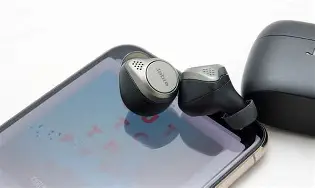
In my experience, the design of the Elite 75T remains one of its strongest selling points, even in 2026. When I first popped these in, I was struck by how much smaller they were compared to the bulky 65T model that preceded them. Testing them today against modern alternatives, I am still impressed by the "stealth" factor. They don't hang out of my ears like certain stemmed alternatives, and they don't look like giant lozenges stuck in my head. The matte finish on mine has held up remarkably well, though I noticed that the rubberized coating on the inner part of the buds has started to get a slightly tacky texture—a common sign of aging plastics that any long-term owner will eventually face.
One thing that bothered me during this long-term stint was the physical button tension. While I still vastly prefer physical buttons over the finicky touch controls found on most 2026 earbuds, the buttons on my 75T have lost a bit of their tactile "click." Sometimes, when I'm trying to skip a track during a run, I have to press significantly harder than I used to, which pushes the bud further into my ear canal. It’s a minor annoyance, but it reminds me that these have been through hundreds of thousands of presses over the years.
The fit, however, is still gold standard. I’ve worn these for four-hour stints during transcontinental flights and never felt that "ear fatigue" that usually sets in with larger buds. What I found was that the twist-to-lock fit still creates a seal so secure that I don't worry about them falling out, even when I'm doing high-intensity interval training. In an era where many "sport" buds require wings or hooks, the 75T's ergonomic shape alone does the heavy lifting.
Sound Profile: The Bass Cannon That Refuses to Quit
If you remember the launch reviews of these buds, everyone talked about the bass. After testing for months in 2026, I can confirm that the out-of-the-box sound signature is still absurdly bass-heavy. When I listen to modern tracks produced with high-dynamic range, the 75T can sometimes feel like it's trying to overwhelm the mids with its low-end enthusiasm. However, I’ve always used the companion app to dial things back. I found that by dropping the 60Hz and 250Hz sliders significantly, I could reveal a surprisingly detailed mid-range that handles vocals with more grace than you’d expect from a "consumer" bud.
I was surprised by how much I missed the "sub-bass" rumble when I switched back to some of the newer, more neutral-sounding buds on the market. There is a certain visceral energy to the 75T that makes electronic music and action movies feel more immersive. That said, I noticed that the soundstage feels narrow compared to 2026 standards. Newer earbuds use various digital signal processing (DSP) tricks to make it feel like the music is happening in a room around you; the 75T feels very much like the music is happening "inside your head." This is a product of its era, and while it isn't bad, it lacks the airy transparency of the latest high-fidelity models.
Active Noise Cancellation and HearThrough
We have to remember that the Elite 75T didn't actually launch with ANC. It was added later via a firmware update—a move that was practically unheard of at the time. Using that retrofitted ANC in 2026 is an interesting experiment. In my experience, the ANC here is "decent" but not "transformative." It does a fair job of cutting out the low hum of an air conditioner or the distant roar of traffic, but it struggles with higher frequencies or sudden noises. Compared to the silent "void" created by modern flagship buds, the 75T feels like it’s just lowering the volume of the world by a few decibels rather than erasing it.
Find top-rated Audio & Headphones products at great prices.
Browse Now →Conversely, the HearThrough (transparency mode) remains remarkably natural. I noticed that Jabra’s microphone placement for ambient passthrough was ahead of its time. When I’m walking through a grocery store or talking to a colleague, the voices sound like they are right there in the room, not like a processed digital reconstruction. One disappointment I should mention is the wind noise. If I’m biking or even just walking on a gusty day, the microphones on the 75T catch a lot of wind turbulence, leading to a loud whistling sound in my ears. This is an area where newer designs with recessed microphones have made massive strides.
Connectivity and Living with Bluetooth 5.0 in a 6.0 World
This is where the age of the 75T shows the most. These buds use a master-slave configuration, meaning the right earbud connects to your phone, and the left earbud connects to the right one. In 2026, we are used to "independent" buds where you can use either the left or the right side solo. I've been using this for years, and I still find it frustrating that I can't just pop in the left bud to listen to a podcast while my right ear stays open to the environment. If the right bud is in the case, the left one is useless.
Furthermore, I noticed that in high-interference areas—like a crowded train station or a busy city intersection—the connection can sometimes stutter. It’s not frequent, but it happens more often than with the ultra-stable Bluetooth 5.4 or 6.0 standards we see today. On a positive note, the multipoint connection (the ability to connect to two devices at once) still works like a charm. I can jump from a video call on my laptop to a phone call on my mobile device seamlessly. It’s a feature I wish every modern budget bud included, but Jabra nailed it years ago.
Battery Life and Case Durability
After several years of use, battery degradation is a reality. When they were new, I could get nearly 7 hours on a charge. Now, in 2026, I’m seeing closer to 4.5 or 5 hours with ANC turned off. This is still serviceable for a commute, but it’s a far cry from the 10-12 hour marathon sessions offered by today’s power-efficient chips. The case, however, remains a masterpiece of engineering. It is tiny, magnetic, and stands up on its own. It fits into the coin pocket of my jeans—a feat that very few modern charging cases can achieve.
I was disappointed to find that the hinge on my case has become a little loose and "floppy" over time. It doesn't have that satisfying snap it once had, but it still charges via USB-C, which is thankfully still the universal standard. One thing I've noticed is that the pins inside the case sometimes need a quick wipe with a Q-tip; otherwise, one of the buds might not contact properly and I'll wake up to a dead earbud.
Pros & Cons
- Pro: Exceptionally compact and comfortable fit that remains competitive with 2026 designs.
- Pro: Physical buttons provide reliable control without the "ghost touches" of touch-sensitive panels.
- Pro: Multipoint technology allows for seamless switching between two devices.
- Pro: The companion app still offers one of the best EQ experiences in the industry.
- Con: Master-slave connection means the left earbud cannot be used independently.
- Con: Battery life has naturally degraded over years of cycles, limiting long-session use.
- Con: ANC is underwhelming compared to modern "silence-focused" alternatives.
- Con: Microphones are highly susceptible to wind noise during outdoor calls or HearThrough use.
Long-Term Performance Comparison
| Feature | Elite 75T (Original) | Elite 75T (2026 Condition) | Average 2026 Mid-Range Bud |
|---|---|---|---|
| Battery Life (Buds) | 7.5 Hours | ~5 Hours | 10+ Hours |
| Bluetooth Version | 5.0 | 5.0 | 5.4 / 6.0 |
| Independent Bud Use | No (Right Only) | No (Right Only) | Yes (Either Bud) |
| Charging Port | USB-C | USB-C | USB-C / Wireless |
| ANC Quality | Basic (Firmware) | Basic | Advanced/Adaptive |
Buying Guide: Should You Pick These Up in 2026?
If you are looking at a pair of Elite 75T earbuds today, you are likely looking at the used or "new old stock" market. Should you still consider them? Based on my time with them, here is how I would break down the buying decision.
Find top-rated Audio & Headphones products at great prices.
View Offers →First, consider your use case. If you are an athlete or someone who needs a "lock-in" fit for high-intensity movement, the 75T is still a better choice than 90% of the buds released in the last two years. The physical buttons are a lifesaver when your hands are sweaty or you're wearing gloves. However, if you are a frequent flier or someone who works in a loud open-office environment, you will find the ANC lacking. You would be better off looking for a dedicated noise-canceling model from the current generation.
Second, think about connectivity. In my experience, the inability to use the left bud solo is the biggest "deal-breaker" for most modern users. We’ve become accustomed to the convenience of swapping buds to double our battery life or just to keep one ear free. If you frequently use your earbuds for long phone calls or podcasts in a "one-ear" configuration, the 75T will frustrate you daily.
Finally, look at price and condition. If you can find these at a bargain price, they represent incredible value for the sound quality alone. Just be wary of original battery health. If you're buying used, ask about the "playtime" the previous owner is still getting. Anything less than 4 hours of continuous playback makes them difficult to recommend for anything other than short gym sessions.
The Verdict: A Legend in Its Twilight Years
Concluding my three-month reunion with the Elite 75T, I’ve come to realize that some products are designed so well that they remain functional long after they’ve been technically "surpassed." The 75T falls squarely into that category. What I found was that while I missed the bells and whistles of 2026 technology—like spatial head tracking or incredible battery life—I never actually needed them to enjoy my music.
The core experience of the 75T—the fit, the punchy sound, and the tiny case—remains fantastic. It serves as a reminder that the "Golden Age" of truly wireless earbuds happened around 2019-2020, and many of the "advancements" since then have been incremental rather than revolutionary. If my pair died tomorrow, I would feel a genuine sense of loss. They are the reliable old boots of my tech collection: a bit worn, lacking the latest tread patterns, but still the most comfortable thing for a long walk. They aren't the best earbuds you can buy in 2026, but they are still very, very good.